
DR. VARSAK’S OWN PATIENTS
Before & After: Brow Bone Reduction and Forehead Reshaping
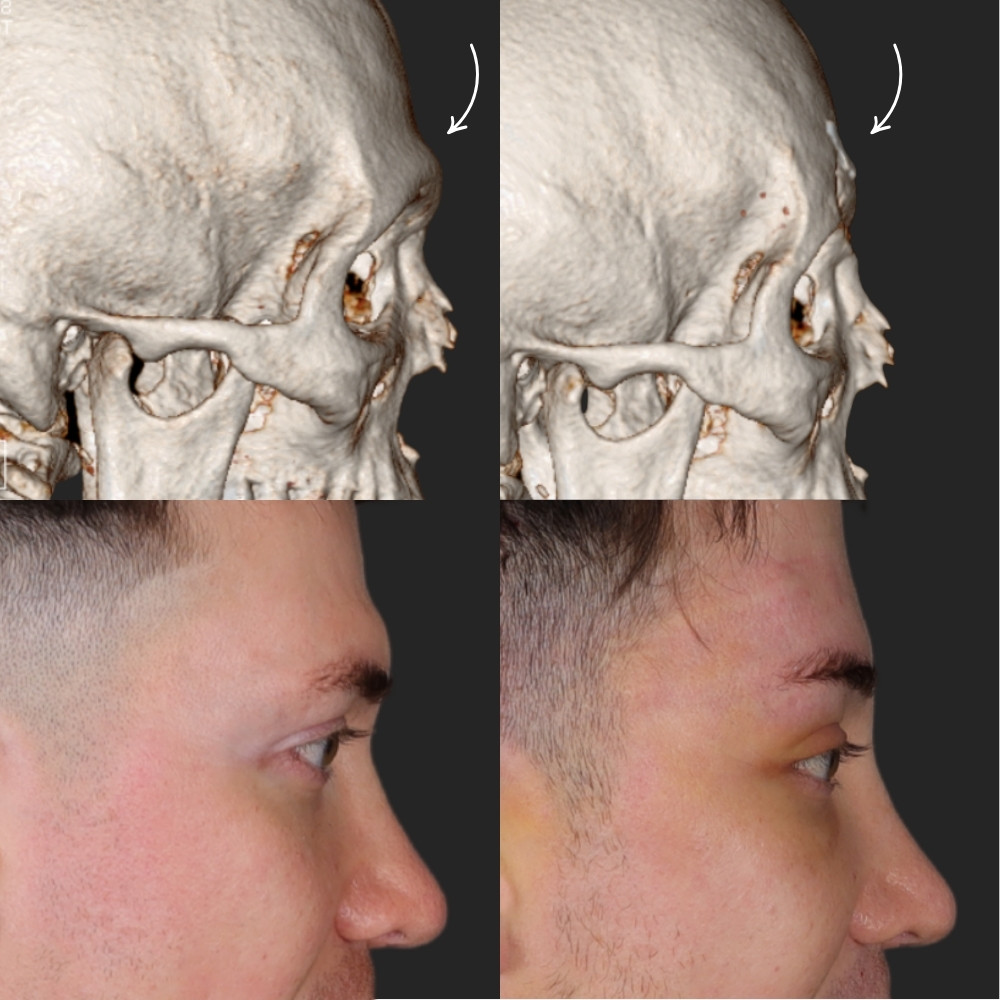
- OPERATION
- Frontoplasty
- FOLLOW UP
- 5 days
- AGE
- 32
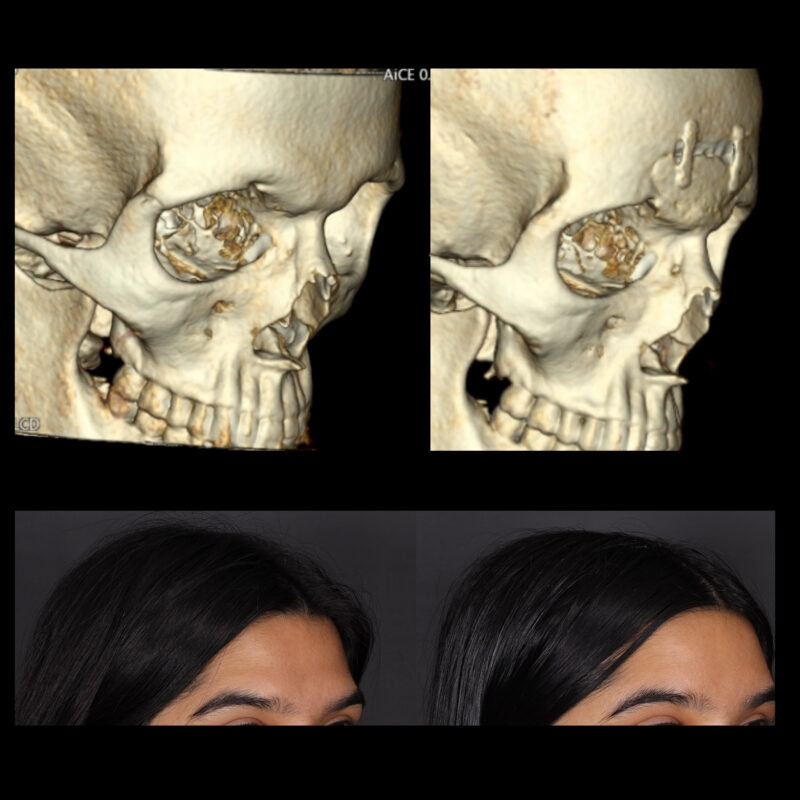
- OPERATION
- Frontoplasty
- FOLLOW UP
- 6 days
- AGE
- 19
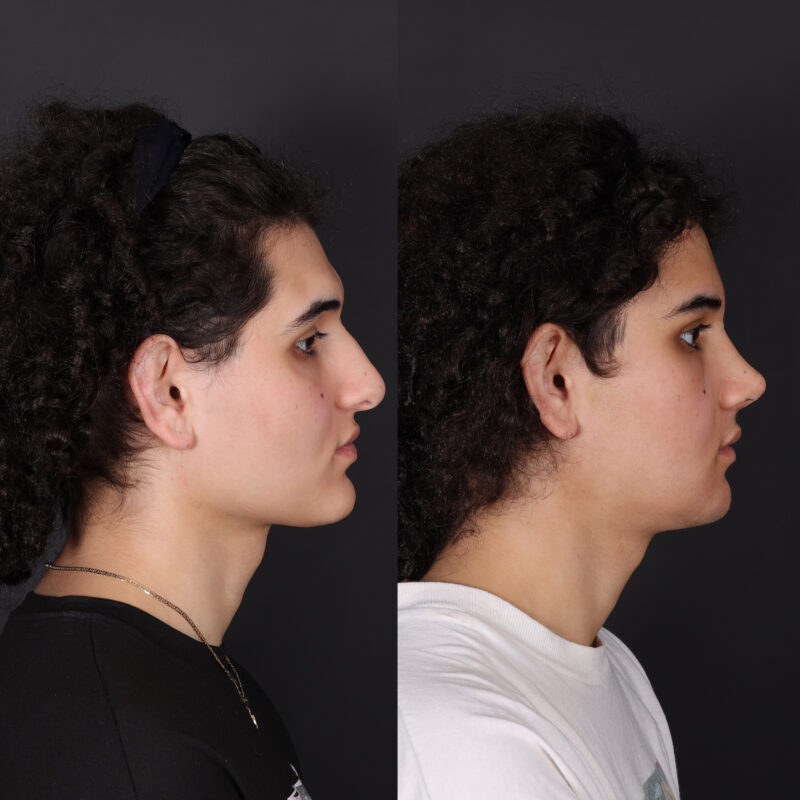
- OPERATION
- Frontoplasty
- FOLLOW UP
- 15 days
- AGE
- 23
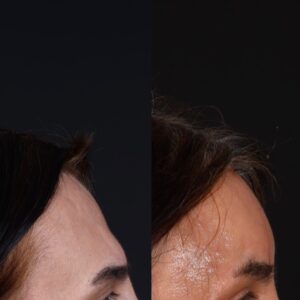
- OPERATION
- Frontoplasty
- FOLLOW UP
- 3 months
- AGE
- 50
All photographs show Dr. Varsak’s own patients, are unretouched, and are published with written consent. Individual results vary according to anatomy, bone structure and healing.
ABOUT US
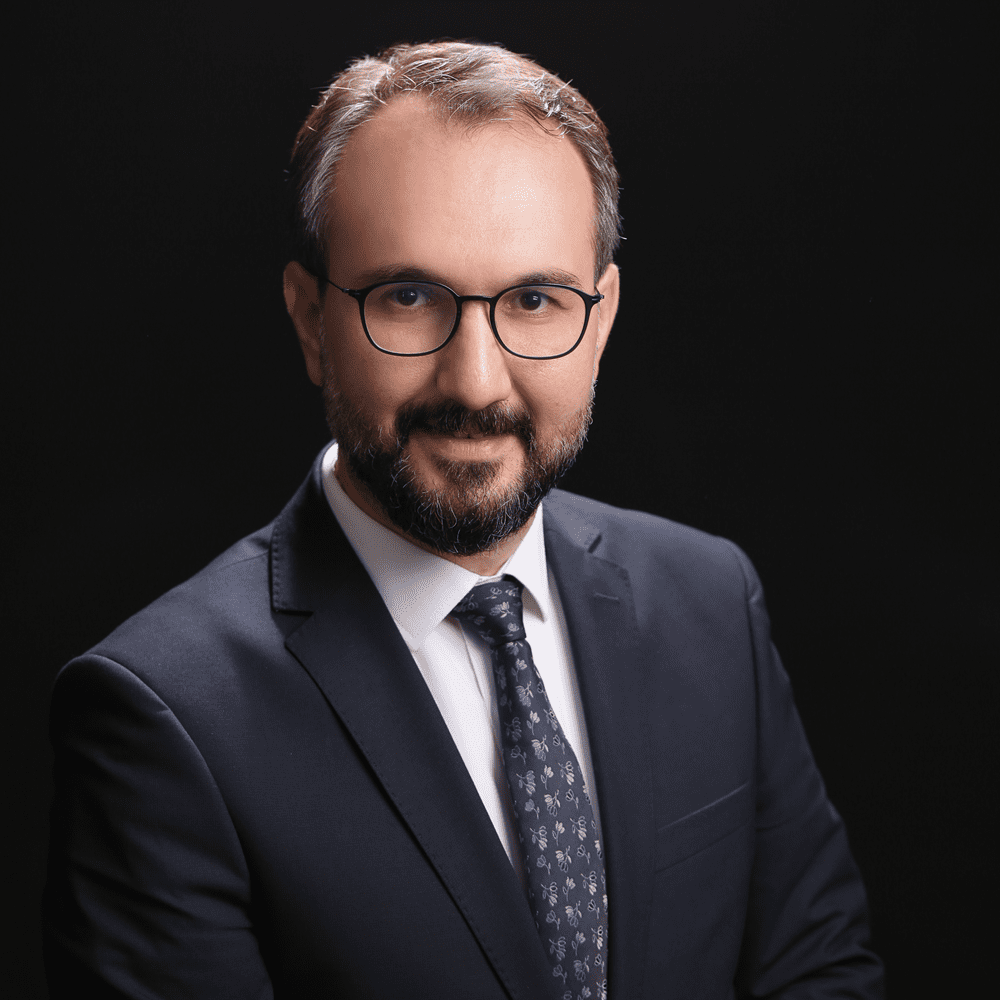
Dr. Yasin Kursad Varsak
Dr. Varsak is an otolaryngologist who sub-specialised in facial plastic surgery, and his practice is deliberately limited to the face.
That focus matters particularly here. The frontal sinus is ENT territory, and knowing how to open, reshape and reconstruct it while preserving its function is not a general plastic surgery skill. He operates at Anadolu Medical Center, an internationally accredited hospital affiliated with Johns Hopkins Medicine, and schedules one major facial case per operating day.
PATIENT FEEDBACK
What Our Patients Say



Dr. Varsak explained every step clearly, first over WhatsApp and then in person, and answered all of my questions patiently. In one eight-hour operation I had a Type 3 forehead reconstruction, a brow lift, rhinoplasty, jaw contouring and a sliding genioplasty. At three weeks post op the results were already showing through the swelling, and all five procedures came out exactly as I had asked, without complications. He visited me in hospital and kept checking my incisions in the weeks that followed.
Read the full review on RealSelf →
I came to Dr. Varsak because of his reviews and his artistry in facial surgery and ENT, and that made me feel confident about trusting him with my face. He did an amazing job, and my features still look like mine, only better. He made me feel heard. My coordinator Deniz was endlessly kind and patient throughout, and the whole experience felt calm and smooth from beginning to end.
Read the full review on RealSelf →A Forehead That Matches the Rest of Your Face
Type 3 frontoplasty in Turkey by Dr. Varsak – correction at bone level, planned around your own anatomy.
Speak to Dr. Varsak’s TeamIN THEIR OWN WORDS
Real Results, Real Stories
Photographs show what happened to the bone. What they cannot show is the week around it – the hospital, the swelling, the first proper look in the mirror.
Here is one of Dr. Varsak’s patients describing that week in their own words, filmed at their own request and published with written consent.
ARRANGED FOR YOU
Your Complete Care Package
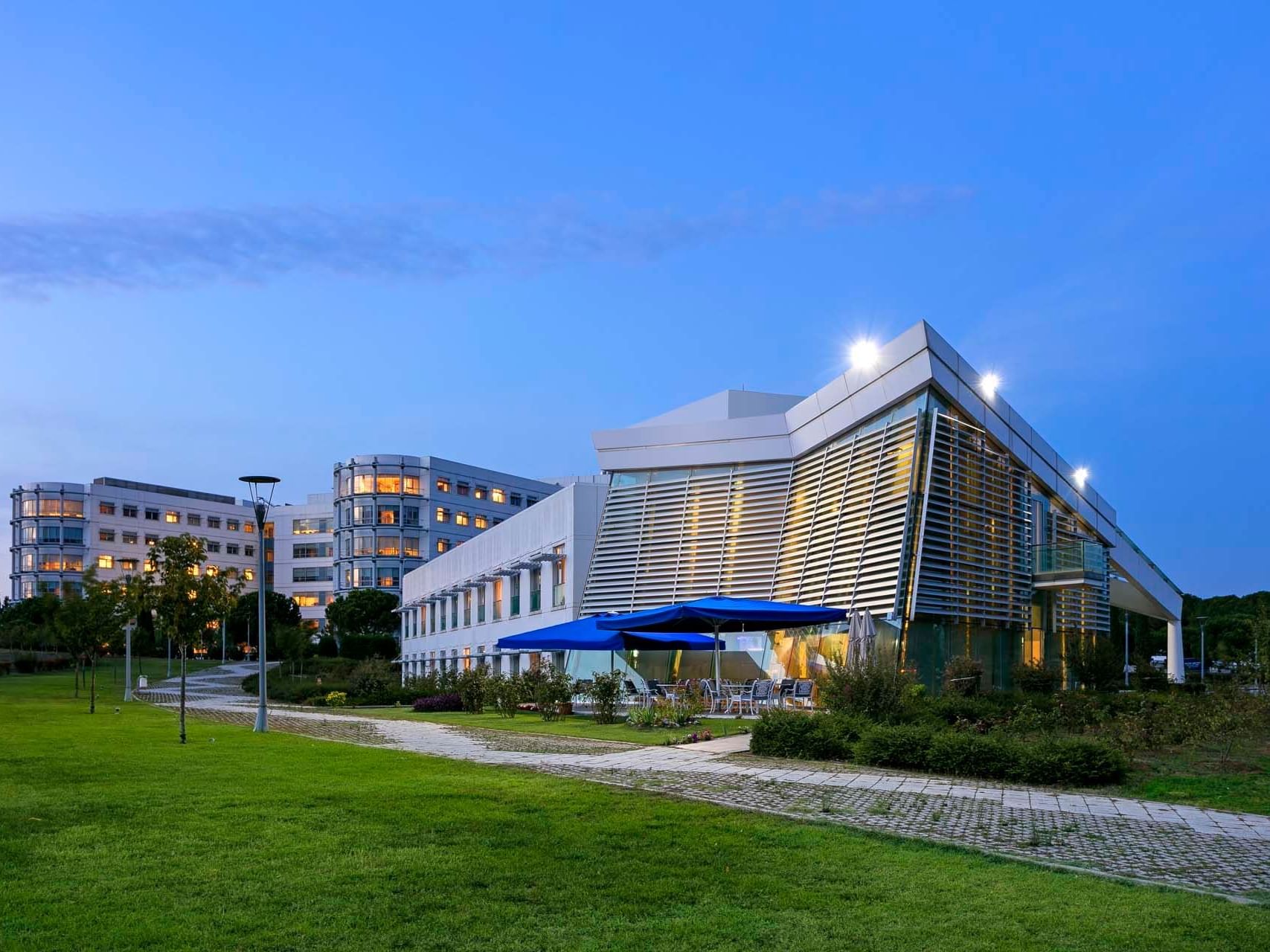
Luxury Accommodation
International patients are accommodated in carefully selected premium hotels, including Titanic Comfort and Hyatt House. Each is chosen for comfort, discretion and proximity to the hospital – a calm environment that supports both recovery and privacy.

VIP Transfer
From the moment you land in Istanbul, your transport is coordinated through one of the country’s most trusted providers. Private airport and hospital transfers are arranged for reliability, comfort and discretion throughout your stay.
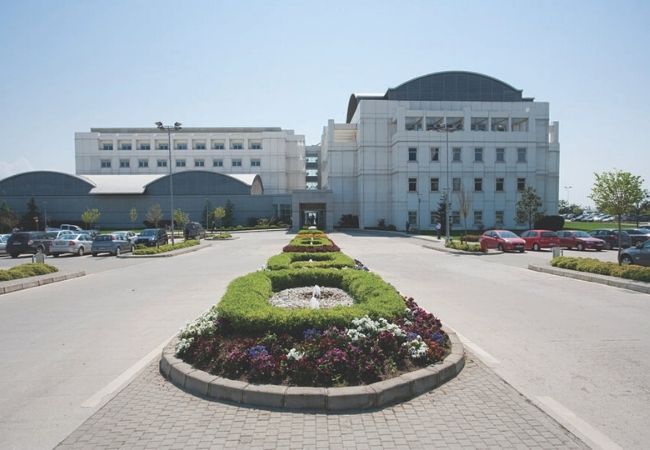
Anadolu Medical Center
Surgery is performed at Anadolu Medical Center, one of Turkey’s most advanced internationally accredited hospitals, affiliated with Johns Hopkins Medicine and serving patients from over 65 countries.

Complication Insurance
Under Turkish healthcare regulations for international patients, a mandatory medical complication policy is arranged by the hospital – additional protection in the rare event of an unexpected complication.
THE DECIDING QUESTION
Type 3 Frontoplasty, or Forehead Bone Shaving?
Behind the forehead sits the frontal sinus, an air cavity covered by a bony front wall. How thick that wall is decides what can safely be done to it – and it is the single biggest factor in both your result and your quote.
When the wall is thick, bone can be reduced by burring it down – forehead bone shaving, brow bone shave, osteoplasty. When the wall is thin, and it often is in exactly the foreheads that project the most, burring cannot remove enough bone without entering the sinus. The result is an under-correction and a residual ridge.
A Type 3 frontoplasty solves it differently. The front wall is lifted out as one plate, thinned and reshaped on the table, then repositioned further back and fixed. The projection is genuinely reduced. The sinus is preserved and keeps working.
Neither is better in the abstract. The right one is the one your anatomy allows, which is why Dr. Varsak reviews photographs first and asks for a CT scan where projection is significant.
PRICING
How Much Does Brow Bone Reduction Cost in Turkey?
Forehead surgery is not a single fixed price, because it is not a single operation. Five things move the figure.
Which technique your anatomy requires – a Type 3 setback is longer and more complex than surface burring.
Whether it is combined with hairline advancement, brow repositioning or rim contouring.
Where it is performed – an accredited hospital carries a different cost base to a small clinic.
Who performs it – a surgeon operating only on faces, one case per day.
What the price includes – hospital stay, anaesthesia, accommodation, transfers, insurance.
In the United States
- Very few surgeons perform a true Type 3 setback rather than burring
- Long waiting lists for the surgeons who do
- Cost frequently places the procedure out of reach
- Accommodation, transfers and aftercare arranged separately by you
With Dr. Varsak in Istanbul
- Type 3 setback performed routinely, not as an exception
- Johns Hopkins Medicine affiliated private hospital
- Technique decided on your CT and photographs, not from a menu
- Hotel, VIP transfers, coordination and complication insurance arranged
- One dedicated coordinator from first contact through to aftercare
YOUR 9 DAYS IN TURKEY
Recovery After Forehead Bone Shaving Surgery in Turkey
Arrive in Turkey, transfer to your hotel, and rest.
Meet with Dr. Varsak for your final consultation and undergo your anaesthesia evaluation.
Your surgery takes place at the hospital, followed by one night’s stay for monitoring and recovery.
You are discharged from hospital and transferred back to your hotel to continue resting.
Post-operative follow-up with the medical team. You continue your recovery at the hotel between appointments.
Suture removal and final medical check, then transfer to the airport and return to your home country.
Plan for a 9-day stay in Turkey – eight nights in total, seven at your hotel and one in hospital on the night of surgery.
HAVE A QUESTION?
Frontoplasty in Turkey: Quick Answers
Forehead reduction performed at bone level, for cases where the front wall of the frontal sinus is too thin to be safely burred down. The wall is removed as a plate, thinned, reshaped and repositioned further back, then fixed in place. The sinus itself is preserved.
No. Shaving (also called burring or osteoplasty) reduces the bone from the surface and is limited by how thick that surface is. A Type 3 setback removes and repositions the plate, allowing a much greater reduction. Which one applies to you depends on your anatomy, not on preference.
It depends on the technique your anatomy requires and on whether the forehead is being addressed alone or alongside hairline advancement or brow repositioning. Dr. Varsak’s team provides a written quotation once he has reviewed your photographs.
The incision is placed along or behind the hairline and is designed to be covered by hair. Raise thinning hair or a family history of hair loss during your consultation, as this affects where the incision is placed.
Yes. The cavity and its drainage are preserved – the procedure reshapes the wall in front of it rather than obliterating the cavity. Sinusitis is listed among the rare risks and is discussed as part of your consent.
For significant forehead projection, yes. The scan shows how thick the anterior wall is, which is what determines whether a setback or burring is appropriate. If you already have a recent scan, send it with your enquiry.
Plan for 9 days, which is eight nights in total – seven at your hotel and one in hospital on the night of surgery. You arrive on day one, meet Dr. Varsak and the anaesthetist on day two, have surgery on day three, and fly home on day nine once your sutures are removed and your final check is done.
Most patients are comfortable in public within 7–10 days and back at work around the two-week mark. Residual swelling settles gradually over the following months.
Yes. Bone that has been reshaped and repositioned does not revert.
As with any surgery under general anaesthesia there are general risks. Procedure-specific ones, all uncommon, include scarring (more visible where hair is thinning), sinusitis, prolonged or permanent forehead numbness, contour irregularity in the bone, and hair loss along the incision. Dr. Varsak discusses each of these with you before you consent.
LOCATION
Why Come to Istanbul for Your Frontoplasty with Dr. Varsak?
Istanbul’s position in facial surgery rests on volume and infrastructure: internationally accredited hospitals, surgeons who perform these operations weekly rather than occasionally, and an established system for treating patients who have flown in. For a Type 3 frontoplasty that concentration matters more than for most procedures – the operation sits between ENT and facial aesthetics, and the number of surgeons worldwide who perform it regularly is small.

